Altitude sickness killed two men aboard the Zénith in 1875 not because the sky was cruel but because thin air quietly hijacks the very faculty that would have saved them: sound judgment. That paradox—where the symptom is the loss of the ability to recognize the symptom—turns a daring scientific attempt into a case study that still matters for pilots, climbers, and spacefarers today.
Why the Zénith ascent matters to understanding altitude sickness
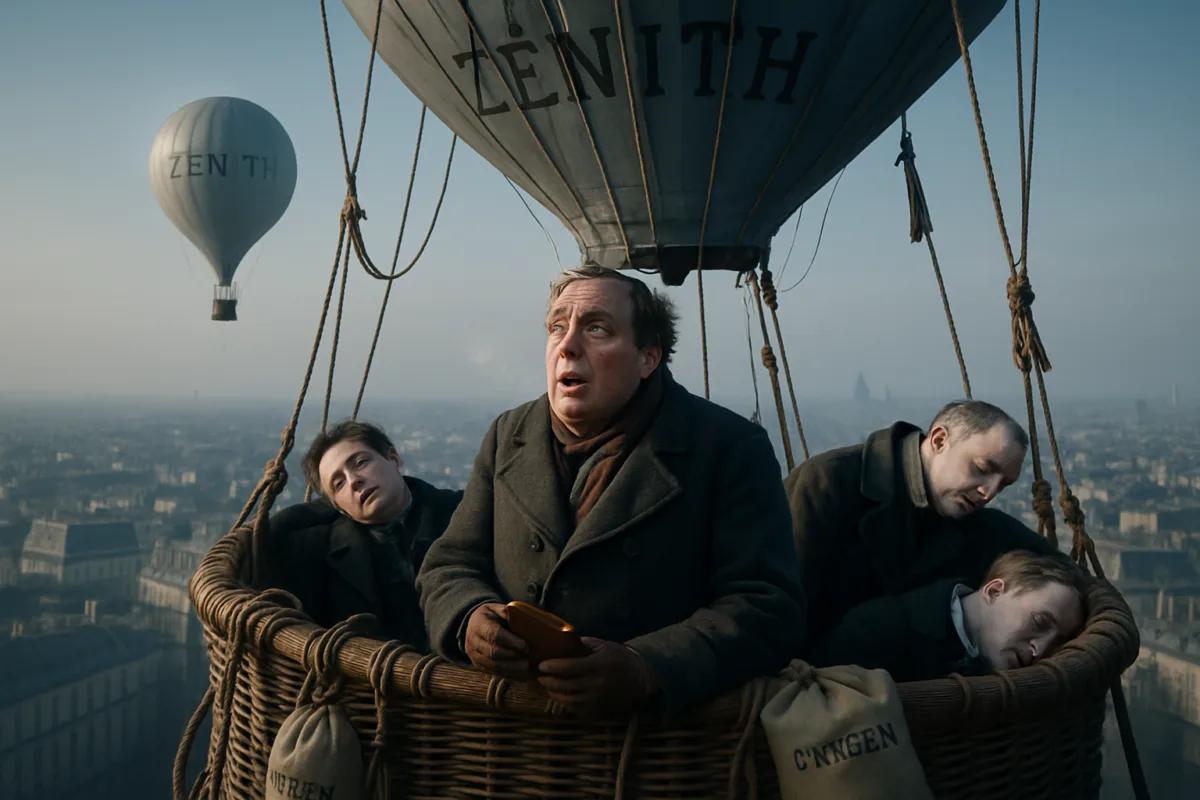
The 1875 Zénith flight, carrying Gaston Tissandier, Joseph Croce-Spinelli, and Henri Sivel, climbed to nearly 28,000 feet with oxygen bags aboard. They were trying to push human experience upward, testing altitude limits in a wicker basket over Paris. Yet the tools they carried did not prevent tragedy; two men died and one returned able only to describe how thin air had changed their minds.
This episode matters because it reframes altitude sickness from an abstract complaint into a cognitive hazard. Rather than a simple physiological failure noticed by obvious warning signs, hypoxia at high but survivable altitudes often erodes the capacity to perceive danger. That epistemic blind spot is the critical takeaway for anyone who operates where oxygen is scarce.
How hypoxia covertly erodes judgment and decision-making
Hypoxia is not dramatic in the way a broken bone or heavy bleeding is dramatic. Instead, it tends to produce calm, indifference, and impaired reasoning—subtle changes that make the problem worse before anyone recognizes it. Tissandier’s account of the ascent describes a serene detachment: a creeping calm and a willingness to keep rising.
Put another way, the primary danger of altitude sickness is not simply loss of oxygen; it is loss of meta-cognition—your ability to notice that your thinking is failing. Because the impairment applies to the very cognitive functions used to evaluate and respond to risk, relying on personal judgment alone becomes dangerously insufficient at altitude.
Transitional note: from description to implication
Understanding this cognitive profile shifts how we should respond. If hypoxia steals judgment, then procedures, automatic systems, and external checks must compensate.
Why equipment alone cannot solve the problem
One of the most frustrating details of the Zénith tragedy is how close the crew came to saving themselves. They had bags of oxygen-enriched air within reach for the entire climb. Yet, impaired by thin air, they did not use them when it mattered most. This is not an indictment of gear; it’s an indictment of the assumption that preparedness equals survival.
Modern readers might therefore argue that better instruments, alarms, or redundant systems would eliminate the risk. Those improvements help, but they are not panaceas. As long as human operators can ignore or disable safeguards—intentionally or because they no longer recognize danger—equipment remains vulnerable to the same cognitive failings hypoxia produces.
Why training and design must assume cognitive failure
Progress requires accepting an uncomfortable premise: humans at altitude are unreliable sensors of their own condition. Training that relies on subjective self-assessment is inadequate. Rather, systems must be designed to anticipate and compensate for cognitive impairment, not merely to support a rational operator.
Different altitudes, different mechanisms: hypoxia vs. ebullism
It’s important to be precise about how altitude-related dangers differ. The Zénith crew succumbed to garden-variety hypoxia—the air was too thin at around 28,000 feet to supply enough oxygen with each breath. That process can unfold gradually and silently, leaving time but not clarity.
By contrast, beyond roughly 63,000 feet the physical environment itself presents immediate, violent risks—ebullism—where low pressure allows bodily fluids to vaporize. That scenario is faster and more catastrophic, often leaving seconds rather than an hour. Both are oxygen-related, but both demand distinct mitigations: the former requires cognitive compensations and procedural redundancy, the latter requires technical protection like pressure suits and rapid rescue.
Argument: procedural safeguards and automation should be prioritized
Given the Zénith lesson, the reasonable argument is this: organizations that operate at altitude should adopt systems that do not depend solely on human self-diagnosis. Automation, forced-action protocols, and independent monitoring must be prioritized over voluntary responses.
This is not a Luddite rejection of human skill; it’s pragmatic risk management. Humans excel at nuance, improvisation, and adapting to unpredicted contingencies. But at altitudes where hypoxia stealthily reduces nuance and undercuts improvisation, the baseline safety strategy should be automation and mandatory checks that trigger regardless of perceived calm.
Examples of policies that follow logically
Several practical policies flow from this premise: automatic oxygen deployment systems in balloons and light aircraft, mandatory buddy checks where crewmembers must verify each other’s oxygen use, and alarm systems that cannot be silenced without a physical confirmation that the user is alert. These are not speculative; variants already exist in aviation and mountaineering, and the Zénith narrative supports expanding and formalizing them.
Translating history into modern practice: actionable interventions
The past becomes useful when it informs concrete change. From the Zénith story, at least five interventions emerge as high impact and realistic.
- Automated oxygen systems that switch on at preset altitudes or physiological thresholds, rather than relying on manual deployment.
- Wearable cognitive indicators—simple pulse oximeters with persistent, non-ambiguous alerts on both wearer and teammate displays.
- Mandatory cross-check protocols: verbal confirmations and redundant tasks that require two people to jointly verify oxygen deployment.
- Training scenarios that simulate cognitive impairment—forcing crews to act based on instrument prompts rather than subjective feeling.
- Designing equipment placement and labeling so that emergency oxygen is the most obvious and accessible action, minimizing steps required to reach it.
These measures emphasize system-level resilience: they accept that at altitude, an individual may not perceive danger and therefore rely on others—systems, teammates, or automation—to notice instead.
What the Zénith case still demands of us today
Critically, the Zénith tragedy warns against complacency. A century and a half of better instruments changes the tools but not the human brain. Thin air still makes decisions for you by stealing your ability to make them. That insight should inform the culture of any organization whose members operate in low-oxygen environments.
Investing in robust, automated safeguards is not expensive hubris; it is targeted humility. It respects the limits of human perception and engineering ingenuity alike, using each where it performs best.
Transitional reminder before practical closure
So while technology has advanced since 1875, the underlying lesson remains: anticipate cognitive failure and design systems to detect and counter it.
The Zénith balloon’s passengers paid with their lives for a lesson that was both specific and universal: thin air erodes judgment before it erodes tissue. That lesson obliges modern aviators, climbers, and aerospace designers to assume that operators will sometimes fail to recognize danger. The practical remedy is straightforward—implement automatic systems, enforce cross-checks, and train to procedural muscle memory so that when the mind softens, the system does not. Act on that obligation today by auditing your emergency protocols, adding redundant alerts, and prioritizing designs that require the fewest—and the most obvious—actions in crisis. Those steps are small compared with a human life, and they honor the dead by making our own practices measurably safer.

Dr. Morgan directed the Archives Program from 2014 to 2017, gaining extensive experience in research documentation, information management, and the preservation of scholarly resources. Throughout her career, she has worked closely with academic publications and research materials, developing expertise in evaluating scientific sources and communicating complex topics to broad audiences.
Her primary areas of specialization include scientific publishing, research communication, editorial review, and the translation of technical research into accessible educational content. She has contributed to projects involving space science, astronomy, environmental science, history, archaeology, and emerging scientific discoveries, always emphasizing accuracy, transparency, and the responsible presentation of evidence.
As Editorial Director of Muskurahat.us, Dr. Morgan leads the editorial review process for scientific articles, ensuring that content is based on reputable sources, peer-reviewed research whenever available, and publications from recognized universities, research institutions, and international scientific organizations.
She is committed to promoting scientific literacy through clear, engaging, and well-documented articles that help readers better understand scientific discoveries and their impact on society. Her editorial philosophy is founded on accuracy, intellectual integrity, independent journalism, and continuous learning as scientific knowledge evolves.
Through her work at Muskurahat.us, Dr. Morgan supports the publication of trustworthy scientific content that makes complex research accessible to readers around the world while maintaining rigorous editorial standards.