Ceuta is a compact, intriguing city perched at the narrow gateway between the Mediterranean Sea and the Atlantic Ocean. Its size belies the complexity of the questions it raises: jurisdiction, identity, history, and daily life. For travelers, students, or anyone trying to answer the simple-sounding question Is Ceuta part of Spain or Africa?, this article offers a thorough, SEO-minded exploration that covers geography, law, history, demographics, culture, economy, and travel practicalities.
Is Ceuta part of Spain or Africa?
At first glance the answer is both straightforward and politically charged: Ceuta is an autonomous Spanish city located on the African continent. Legally and administratively it belongs to the Kingdom of Spain, is governed under Spanish law, and its residents hold Spanish citizenship and European Union status, with specific exceptions and special rules. Geographically and regionally, however, Ceuta sits on the northern coast of Africa and shares a land border with Morocco, which claims sovereignty over it. This duality is central to understanding Ceuta’s status and the ongoing diplomatic conversation between Spain and Morocco.
Geography and strategic location
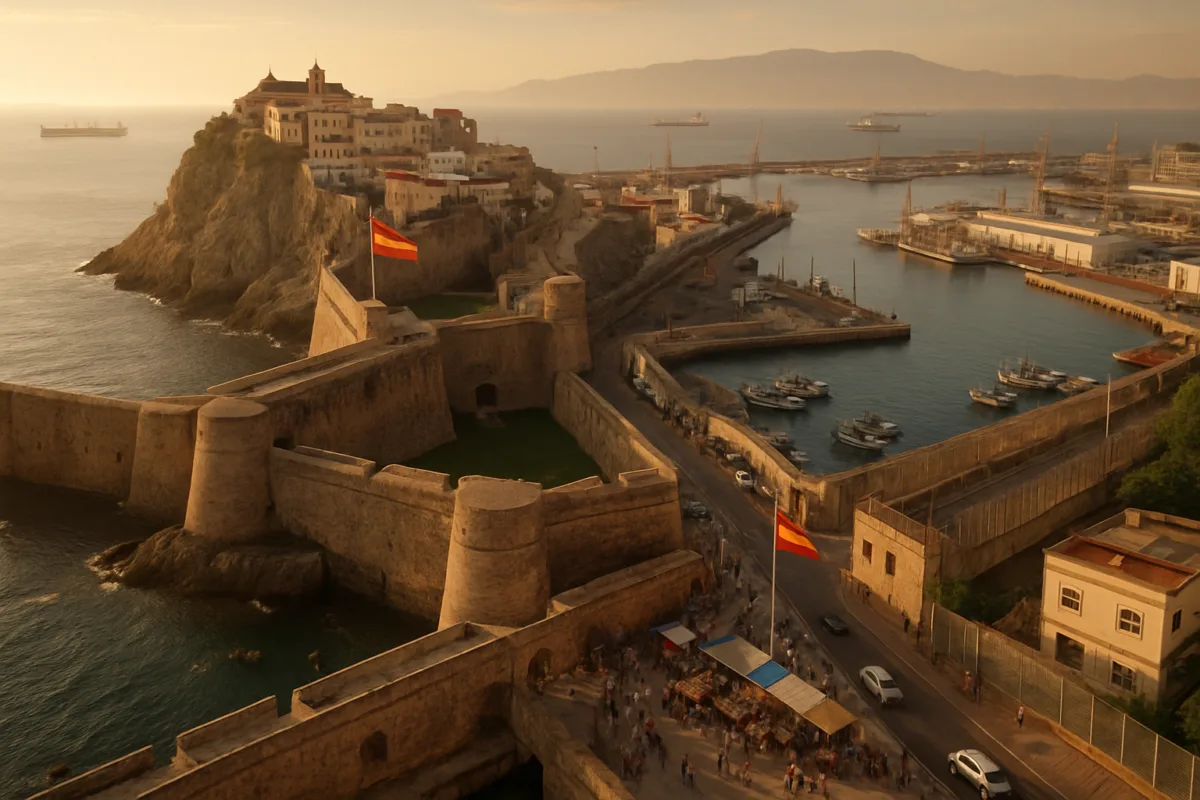
Ceuta occupies a rocky promontory on the African side of the Strait of Gibraltar, directly opposite the southern tip of the Iberian Peninsula. The city’s total surface area is small, around a couple of dozen square kilometers, yet its coastline and harbor make it a strategic maritime point. The strait itself is one of the busiest shipping lanes in the world, and control of ports and coastal points like Ceuta has had military and commercial importance for centuries.
Physical characteristics
Ceuta is characterized by steep hills, fortifications, a small but busy port, and a mix of modern urban zones and historic quarters. The climate is Mediterranean, with warm, dry summers and mild, wet winters, making it ecologically similar to southern Spain despite being in North Africa.
Historical background
Understanding Ceuta today requires a brief dive into its layered history. The city has been inhabited since antiquity and has seen Phoenician, Carthaginian, Roman, Byzantine, Visigothic, and Islamic rule. In 1415 Ceuta was captured by the Portuguese during the Age of Discoveries. When the Iberian crowns were united under the Habsburgs, Ceuta effectively came under Spanish influence. After Portugal regained independence in the 17th century, Ceuta chose to remain under Spanish sovereignty, a status later recognized diplomatically. Since then the city has remained administratively and politically tied to Spain, even as regional powers and local populations evolved around it.
Political and legal status
Legally, Ceuta is one of Spain’s two autonomous cities, the other being Melilla. As an autonomous city Ceuta has a local assembly and a mayor-president with competencies allocated by Spain’s constitutional system. Residents are Spanish citizens with full political rights. When Spain joined the European Union in 1986, Ceuta and Melilla also became part of the EU, though with special arrangements and exceptions. These exceptions include custom and tax treatments: the cities are outside the European Union VAT area and have particular customs regulations applied to cross-border trade.
Schengen Area and border controls
Despite their EU membership, Ceuta and Melilla are not part of the Schengen Area. They are external land borders of the European Union, and passport checks and border controls are enforced at crossings with Morocco. This affects travelers who must present valid travel documents when moving between mainland Spain and Ceuta or crossing into Morocco. The border is closely managed and has been the focus of both humanitarian and security concerns due to migration pressure and cross-border smuggling.
Moroccan claims and diplomatic context
Morocco claims Ceuta and Melilla as part of its national territory, a position that has been persistent since Morocco gained independence in the mid-20th century. Spain rejects these claims and points to centuries of Spanish administration and the self-determination of the inhabitants. The dispute is complex, involving historical treaties, national identities, and geopolitics. It has occasionally led to diplomatic tensions, trade frictions, and public protest, but it has not resulted in armed conflict in modern times. The status quo continues to be managed through bilateral talks, European engagements, and international law frameworks.
Demographics, languages, and religion
Ceuta’s population is diverse and multicultural. The city is home to Christians, Muslims, Jews, and a small Hindu community. Spanish is the official language and the lingua franca of administration, education, and commerce, but Arabic dialects and Berber languages are also widely spoken, reflecting historical and social ties to North Africa. Religiously, Catholicism has public institutional weight, while Islam is practiced by a significant portion of the population, contributing to a pluralistic social fabric.
Culture and identity
Cultural life in Ceuta is a blend. Festivals, culinary traditions, music, and daily life mix Andalusian Spanish influences with North African customs. This hybridity is visible in architecture, street markets, food, and community rituals. For many residents, identity is not a simple binary of Spanish versus Moroccan but a layered, lived combination of local, national, and regional elements.
Economy and infrastructure
Ceuta’s economy relies on services, public administration, retail, port activities, and a modest fishing industry. Cross-border commerce with Morocco is a significant informal economic factor; shoppers from both sides of the border, and people who work in one country and live in the other, shape everyday economic life. Additionally, Ceuta receives government transfers from Spain for public services, infrastructure, and security. The military and port activities also matter strategically and economically.
Challenges and opportunities
Ceuta faces economic challenges typical of small, isolated territories: limited land for development, dependence on external supplies, and social pressures related to migration and unemployment. At the same time, its strategic location, EU links, and multicultural talent present opportunities for tourism, cross-border economic projects, and niche maritime industries.
Travel information and practicalities
Travelers should be aware of the specific rules that apply to Ceuta. Because it is not in the Schengen Area, travel between Ceuta and mainland Spain involves border checks. Visitors arriving from mainland Spain must carry valid identification; EU citizens can use national IDs while third-country nationals will need passports and possibly visas depending on their nationality. Ceuta uses the euro, participates in Spanish public services including healthcare for residents, and offers typical tourist facilities such as hotels, restaurants, and guided historic tours.
From mainland Spain, frequent ferries and occasional flights connect to Ceuta. Overland crossings from Morocco are controlled at the Tarajal border point where passports are checked. Travelers should be mindful of local regulations, cultural norms related to dress and behavior, and current diplomatic situations that can sometimes influence border operations. Safety is generally comparable to many urban areas, though visitors should remain aware of pickpocketing in crowded markets and respect local laws.
For researchers and journalists, Ceuta offers a case study in sovereignty, integration, border management, and cultural hybridity. Its institutions, archival records, and local academic contacts can be valuable for studies on European enclaves, migration, and maritime geopolitics.
In the end, answering the question Is Ceuta part of Spain or Africa? depends on the perspective you use. Legally and administratively, it is Spanish territory and part of the European Union with special provisions. Geographically and culturally, it is part of North Africa, sharing land, languages, and social ties with Morocco and the wider Maghreb. This dual reality has shaped Ceuta into a unique place where continents, histories, and identities overlap, making it a living example of how borders can be both lines on a map and vibrant interfaces of human exchange.
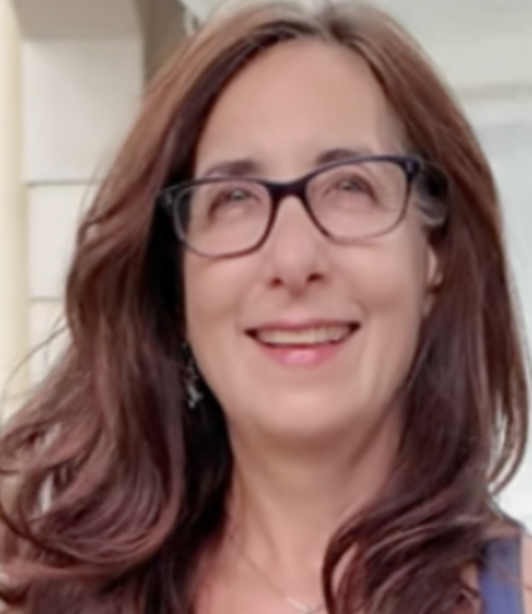
Dr. Morgan directed the Archives Program from 2014 to 2017, gaining extensive experience in research documentation, information management, and the preservation of scholarly resources. Throughout her career, she has worked closely with academic publications and research materials, developing expertise in evaluating scientific sources and communicating complex topics to broad audiences.
Her primary areas of specialization include scientific publishing, research communication, editorial review, and the translation of technical research into accessible educational content. She has contributed to projects involving space science, astronomy, environmental science, history, archaeology, and emerging scientific discoveries, always emphasizing accuracy, transparency, and the responsible presentation of evidence.
As Editorial Director of Muskurahat.us, Dr. Morgan leads the editorial review process for scientific articles, ensuring that content is based on reputable sources, peer-reviewed research whenever available, and publications from recognized universities, research institutions, and international scientific organizations.
She is committed to promoting scientific literacy through clear, engaging, and well-documented articles that help readers better understand scientific discoveries and their impact on society. Her editorial philosophy is founded on accuracy, intellectual integrity, independent journalism, and continuous learning as scientific knowledge evolves.
Through her work at Muskurahat.us, Dr. Morgan supports the publication of trustworthy scientific content that makes complex research accessible to readers around the world while maintaining rigorous editorial standards.