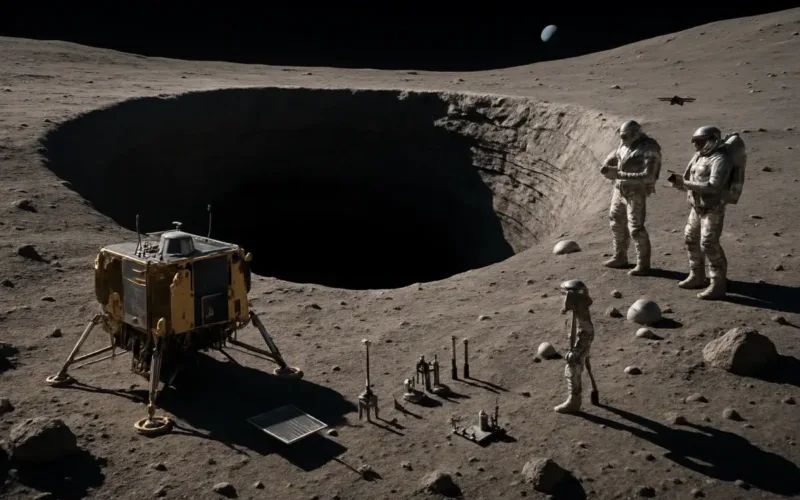
In August 1960, Sputnik 5 carried a most unusual cargo into orbit: two Moscow strays, 42 mice, two rats, a rabbit, flies, plants and fungi. The Sputnik 5 mission proved that living creatures could survive launch, weightlessness and reentry—an achievement that directly cleared the biological hurdle for Yuri Gagarin’s historic human flight months later. Yet beyond its scientific milestone, this mission crystallized a broader truth: space exploration has always been as much about politics, ethics and symbolism as about engineering.
Why Sputnik 5 mattered for human spaceflight
Soviet Korabl-Sputnik 2—known in the West simply as Sputnik 5—was not merely a test flight; it was decisive proof that life could endure orbital conditions and return unscathed. The capsule completed 17 revolutions and landed after roughly 25 hours, with all biological passengers alive and functional. That empirical result convinced Soviet planners they had cleared the final biological milestone before attempting to send a human into orbit.
Importantly, the data were concrete: telemetry showed elevated heart rates during ascent that normalized in orbit, and postflight examinations reported healthy recoveries. Consequently, the mission was a technical and psychological precursor to Yuri Gagarin’s flight, demonstrating that spacecraft systems, life-support monitoring and reentry procedures could collectively protect living organisms.
The science behind survival: Vostok systems and biological monitoring
The Vostok-derived capsule used for Korabl-Sputnik 2 was outfitted with biomedical sensors, containment cages and environmental controls calibrated for small animals. Scientists tracked vital signs continuously, gaining insight into cardiovascular responses, stress markers and the short-term impacts of microgravity. Those physiological data points were vastly more informative than theoretical models or suborbital tests.
Consequently, the flight established a protocol: test biological responses in orbit first, then incrementally scale to humans. This incrementalist approach reduced catastrophic risk and offered a defensible rationale for pushing ahead with human missions. From an engineering standpoint, that was prudent and arguably necessary.
Transitional insight: scientific caution as moral obligation
Yet this argument for prudence raises ethical questions that remain unresolved. If the moral obligation to protect human life justified animal testing in the 1960s, what standards should govern similar decisions today? The Sputnik 5 example forces us to weigh historical context against contemporary ethics and evolving alternatives.
Belka, Strelka and the human face of space propaganda
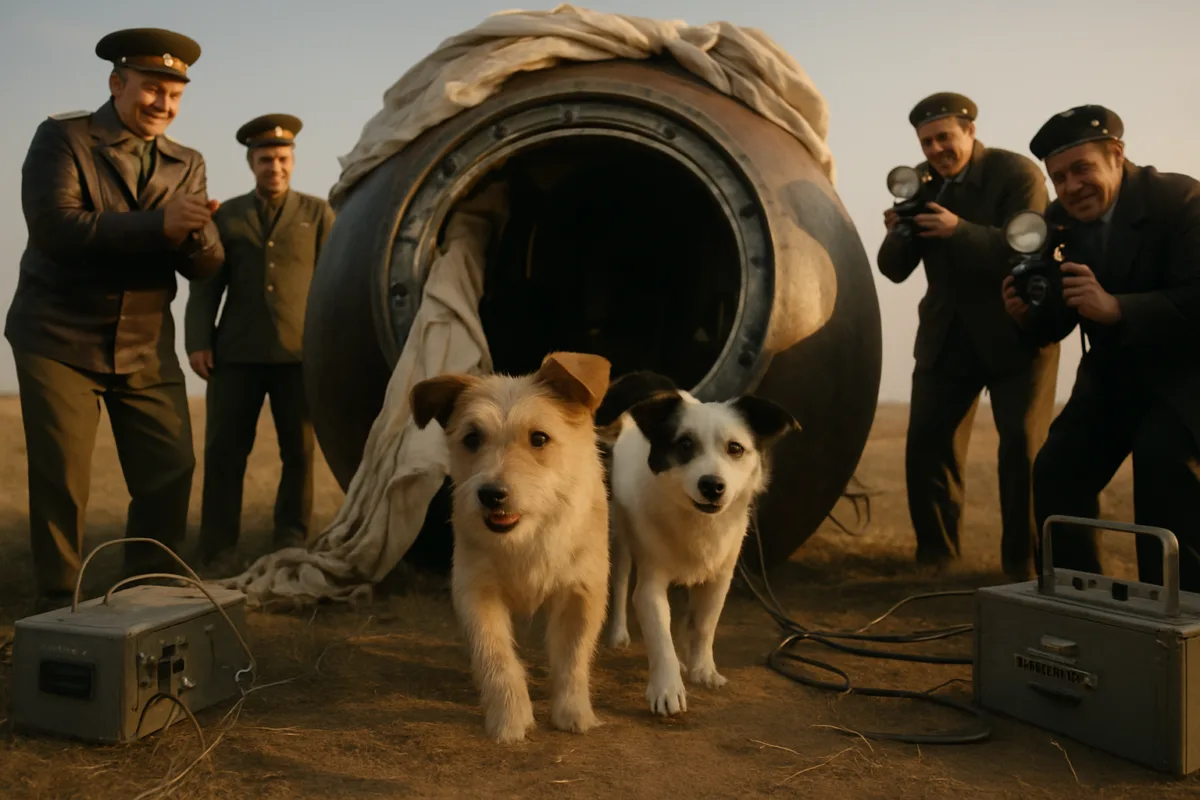
Belka and Strelka, the two dogs on board, became immediate celebrities. Photographs of the terrier-mix and the slightly larger mongrel circulated worldwide and were used to demonstrate Soviet technological prowess. The vivid public images—a pair of dogs walking out of a spacecraft under their own power—translated a technical triumph into a powerful cultural narrative.
Meanwhile, the mission’s transparency—public medical reports, press tours, and visible recovery procedures—contrasted with a period of deep secrecy in many Cold War arenas. That openness amplified the mission’s impact, converting a scientific experiment into soft power with global resonance.
From Baikonur to the White House: Pushinka and Cold War diplomacy
Months after the flight, Strelka gave birth to a litter that included Pushinka, a fluffy puppy who would become a Cold War symbol. Following a diplomatic exchange at the 1961 Vienna Summit, Pushinka was sent as a gift to Caroline Kennedy and arrived at the White House with a Soviet passport. The gesture was small in material terms but large in diplomatic symbolism.
Gifts like Pushinka served a dual purpose: they humanized geopolitical rivals and projected a softer image of Soviet achievement. In this way, Sputnik 5’s legacy was not confined to laboratories and launch pads; it extended into drawing rooms and diplomatic dining tables where a puppy could momentarily bridge ideological divides.
Transitional nuance: symbolism and strategic communication
Thus, the Soviet space program demonstrated a keen awareness of narrative. They knew that scientific validation and media spectacle together could shape perceptions. Pushinka’s comfortable life in the White House—and the later “pupniks” born at the Kennedys’ home—were emblematic of how technology, culture and diplomacy intersect.
Ethical debates: were the dogs and animals treated humanely?
Arguably, the Soviets took precautions by selecting stray mongrels believed to be robust and by monitoring health metrics carefully. The recovery team found every animal alive, and medical reports suggested normal recoveries. From a 1960s perspective, this could be framed as scientifically justified animal research with clear human-safety benefits.
However, contemporary ethics demands more scrutiny. Today we would ask whether non-animal alternatives were fully explored, if consent-like considerations can ever apply, and whether the stress endured during launch undermines the moral calculus. These are hard questions that the Sputnik 5 story forces us to confront.
Transitional reflection: historical context versus modern standards
In other words, we must treat Sputnik 5 both as a technical triumph and a historical artifact shaped by its time. It is fair to assert that the mission saved human lives—Gagarin’s successful flight was built on these experiments—but it is equally fair to interrogate the means.
Lessons for modern space programs and policy
There are practical takeaways from Sputnik 5 that matter today. First, incremental biological testing remains a valid risk-mitigation strategy when human life is at stake. Second, transparency about methods and outcomes builds public trust and softens resistance to controversial research. Third, the symbolic dimension of missions—how images and gestures travel—can be leveraged responsibly to advance both science and diplomacy.
Consequently, contemporary programs should apply stricter welfare standards, invest in non-animal models where possible, and maintain open communication about safety protocols. These steps honor the historical legacy without repeating ethical lapses of the past.
Why the Sputnik 5 story still matters to the public
People are drawn to stories where unlikely protagonists—stray dogs and a puppy—shape global events. That narrative humanizes complex technical achievements and makes them accessible. Moreover, the tale of Belka, Strelka and Pushinka illuminates how science, media and diplomacy combine to produce historical change.
Therefore, preserving and critically examining such stories helps citizens evaluate the trade-offs inherent in large-scale scientific projects. It invites thoughtful public discourse about who benefits from exploration and what ethical limits should apply.
Practical steps policymakers and researchers should take
First, ensure transparent reporting of biological tests, including raw data when possible, to allow independent review. Second, adopt international standards for animal welfare in aerospace research that reflect modern scientific alternatives. Third, recognize the soft-power potential of missions and use it to foster cross-cultural dialogue rather than cheap propaganda.
Taken together, these actions can honor historical achievements like Sputnik 5 while advancing a more ethical, open and diplomatically constructive era of exploration.
What the puppy in the White House teaches us about small acts and big effects
Pushinka’s journey from a Moscow litter to the Oval Office is a vivid testament to how seemingly trivial gestures can reshape public perception and diplomatic tone. A single puppy helped humanize a geopolitical rival at a fraught moment, demonstrating that symbolism often moves faster than policy. That lesson remains relevant: small, well-timed acts of goodwill can open channels that formal diplomacy cannot.
Indeed, the intersection of science and soft power is not an accidental byproduct of Sputnik 5; it was an intended and effective strategy. Modern leaders should therefore think about how scientific milestones can be framed to promote cooperation and mutual understanding, not merely competition.
Sputnik 5 was more than a single mission; it was a turning point where engineering prudence, biological research and international politics converged. The return of Belka and Strelka proved that humans could follow safely into orbit, and Pushinka’s presence in the White House showed how small human moments can alter global narratives. The fair and responsible way forward is to recognize the mission’s technical necessity while applying stricter ethical standards and transparent communication today—so future milestones protect both life and the public trust.

Dr. Morgan directed the Archives Program from 2014 to 2017, gaining extensive experience in research documentation, information management, and the preservation of scholarly resources. Throughout her career, she has worked closely with academic publications and research materials, developing expertise in evaluating scientific sources and communicating complex topics to broad audiences.
Her primary areas of specialization include scientific publishing, research communication, editorial review, and the translation of technical research into accessible educational content. She has contributed to projects involving space science, astronomy, environmental science, history, archaeology, and emerging scientific discoveries, always emphasizing accuracy, transparency, and the responsible presentation of evidence.
As Editorial Director of Muskurahat.us, Dr. Morgan leads the editorial review process for scientific articles, ensuring that content is based on reputable sources, peer-reviewed research whenever available, and publications from recognized universities, research institutions, and international scientific organizations.
She is committed to promoting scientific literacy through clear, engaging, and well-documented articles that help readers better understand scientific discoveries and their impact on society. Her editorial philosophy is founded on accuracy, intellectual integrity, independent journalism, and continuous learning as scientific knowledge evolves.
Through her work at Muskurahat.us, Dr. Morgan supports the publication of trustworthy scientific content that makes complex research accessible to readers around the world while maintaining rigorous editorial standards.