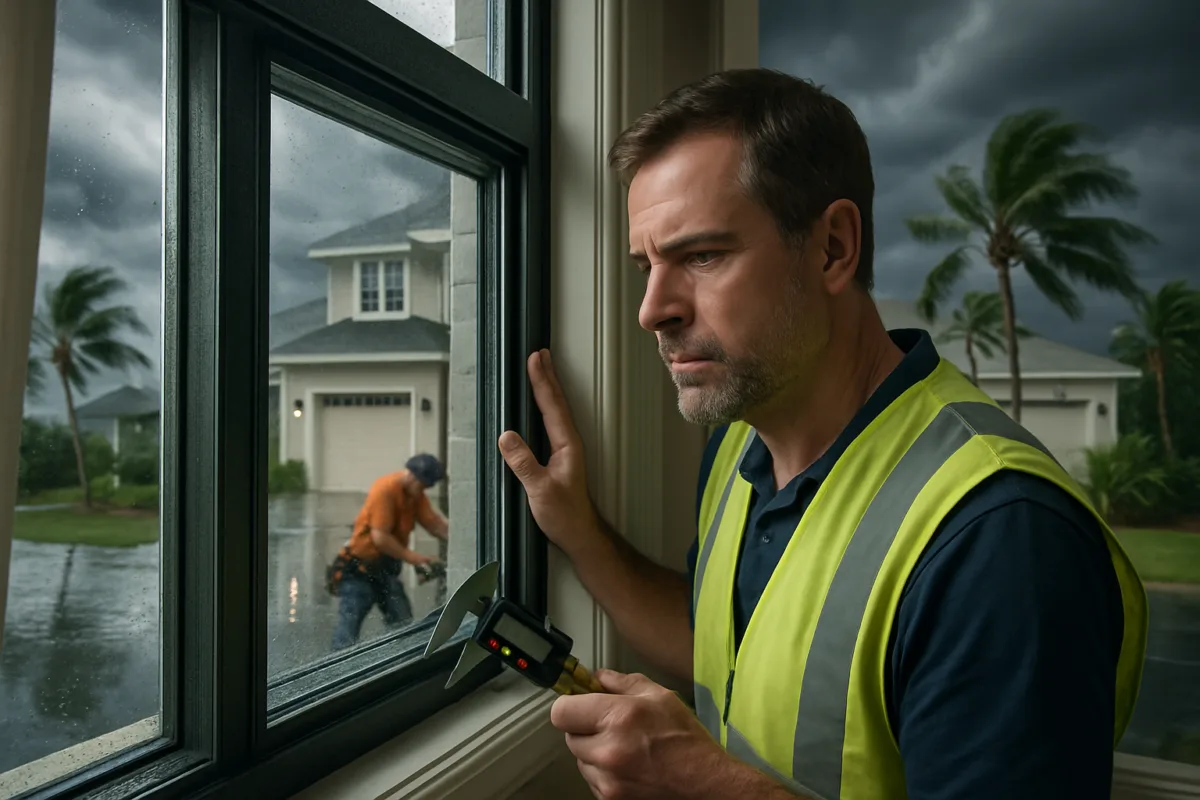
Hurricane seasons are getting more unpredictable and intense, and homeowners in coastal or high-wind regions increasingly ask the same question: how much will it cost to protect a house with impact-resistant hurricane windows? This article breaks down real 2026 cost expectations, the factors that drive pricing, potential insurance and energy savings, ROI considerations, certification requirements, and an actionable decision checklist so you can make a data-driven choice for your home.
How Much Do Hurricane Windows Really Cost: National Averages and 2026 Projections
As of 2026, a practical national average for replacing standard residential windows with hurricane-rated impact windows ranges from roughly $600 to $1,200 per window for economy to mid-tier products. Premium systems—including oversized openings, specialty shapes, triple-laminated glass, and heavy-duty frames—can cost $1,200 to $3,000 per window. For a full-house replacement (10–30 windows depending on home size), homeowners can expect a total project cost commonly in the $8,000 to $40,000 range.
These numbers reflect material cost trends, labor rates, and increased demand following several high-loss storm seasons. Regional variation is significant: in high-risk coastal markets (e.g., Florida, Puerto Rico, Gulf Coast), installers commonly charge a premium of 10–35% due to certification, logistics, and higher demand. Retrofit installations (fitting impact windows into existing frames or openings) typically cost more per window than new construction installations because of additional frame work and custom fitting.
Sample price bands (2026 estimates)
- Entry-level (small, single-hung, basic frame, laminated glass): $600–$900 per window.
- Mid-tier (double-pane, NFRC-rated, reinforced frame): $900–$1,500 per window.
- High-end (oversize, specialty shapes, triple-laminated, heavy-duty aluminum or fiberglass frames): $1,500–$3,000+ per window.
- Full home replacement (10–30 windows): $8,000–$40,000+ depending on quality and size.
How Much Do Hurricane Windows Really Cost — What Drives the Price?
Understanding the cost drivers helps you get accurate quotes and prioritize what matters for your home’s risk profile. The main drivers are:
1. Glass type and certification
Impact-rated glazing is laminated—typically two panes of glass bonded with an interlayer (like PVB). The level of impact resistance (tested to standards such as ASTM, Miami-Dade NOA, or TAS 201/202/203) influences cost. Certified systems that meet Miami-Dade County Notice of Acceptance (NOA) standards often carry a premium because of testing and documentation.
2. Frame materials and reinforcement
Aluminum, vinyl, fiberglass, and wood-clad frames all behave differently in storms. Reinforced aluminum and fiberglass are the most common for high-wind zones. Stronger frames and heavier hardware increase costs but improve long-term performance and lifespan.
3. Size, configuration and installation complexity
Large picture windows, fixed panes, and multi-panel slider systems cost more than standard single-hung replacements. Retrofit installations—where the existing opening is modified—require extra labor, flashing, and possibly structural work. Custom shapes or historic-preservation requirements can add substantially to lead time and price.
4. Labor and local market
Labor is typically 30–50% of the total installed cost. In 2026, labor shortages and licensing/certification requirements in coastal states continue to push labor premiums up. Permit fees and code compliance checks also add to project costs.
5. Additional features
Low-E coatings, argon gas fills, soundproofing laminates, and specialty tints increase both upfront cost and energy performance. Many homeowners find the energy and comfort benefits justify the extra spend.
Quick checklist to assess quotes
- Is the product certified to Miami-Dade NOA, ASTM, or local building code? Ask for documentation.
- Does the quote show line-item costs for materials, labor, permits, and disposal?
- Are warranties (glass, frame, and labor) spelled out in writing?
- Are NFRC energy-performance ratings included (U-factor, SHGC)?
How insurance can offset cost
One of the most important financial considerations is insurance. Many insurers offer premium discounts for impact-resistant upgrades because they materially lower hurricane-related claims. In 2026, insurance discounts vary widely by carrier and region—commonly ranging from 5% to 30% on wind/hurricane portions of premiums. In hurricane-prone states, documented wind-mitigation credits often pay back a meaningful portion of the initial investment over time.
For homeowners considering the math, obtain a written statement from your insurer estimating the likely discount and how long it applies. When combined with reduced repair risk and potential energy savings, the net lifecycle cost of impact windows can be much lower than the sticker price implies.
Energy savings and comfort
Impact windows with modern low-E coatings and insulated frames reduce heat gain and loss. Typical energy savings versus old single-pane windows vary from 5–15% on annual cooling/heating costs (region-dependent). These savings help offset cost but usually take many years to fully recoup the additional premium paid for impact-rated glazing alone.
Estimated simple payback examples
- Single window upgrade: if incremental cost is $600 and annual HVAC savings are $30, simple payback = 20 years (not accounting for insurance discount).
- Whole-house upgrade: $20,000 incremental cost with average annual savings + insurance discounts combined of $1,500: simple payback ≈ 13 years (plus intangible benefits of safety and comfort).
Where to get reliable quotes and what to expect during installation
Get at least three competitive quotes and verify credentials. Expect the process to include a site visit for precise measurements and to review existing conditions (flashing, trim, interior finish). A typical timeline from decision to completion for a mid-sized home is 4–12 weeks, depending on product availability, custom work, and permitting.
What a professional quote should include
- Detailed product descriptions and certification documents (NOA, ASTM, NFRC labels).
- Line-item estimates for materials, labor, permits, and disposal.
- Project timeline and warranty terms.
- Payment schedule and financing options if available.
Permits, inspections, and certifications
In high-wind jurisdictions, local codes may require approved impact products and inspections. Certified installers can expedite permitting and reduce the risk of failing inspections. Ask your contractor which local approvals will be required and who will pull permits.
Return on investment and resale value
Impact windows provide a resale value premium in hurricane-prone markets because buyers value lower insurance and reduced storm vulnerability. Remodeling-value studies routinely show higher than average cost recovery for storm-hardening upgrades in coastal regions, but the exact ROI depends on location, age of home, and buyer preferences. Factor in both tangible savings (insurance and energy) and intangible benefits (safety, noise reduction, storm resilience) when calculating ROI.
Financing and incentives
Financing options include home equity lines, contractor financing, and some specialty loans targeted at hazard mitigation improvements. Additionally, local and state programs may offer grants or low-interest loans for resilience upgrades—check resources like the Database of State Incentives for Renewables & Efficiency (DSIRE) and FEMA mitigation grant programs for potential support. Always verify current federal or state tax credits with an accountant or the official IRS guidance before claiming credits.
How to choose the right contractor and product
Prioritize contractors with proven experience in impact installations and ask for references plus before/after photos. Confirm that the product families have actual lab test reports and local acceptance (e.g., Miami-Dade NOA). Consider warranties thoroughly: glass warranties, frame warranties, and installation workmanship coverage are all important.
Questions to ask a prospective contractor
- Can you show me the product certification and test reports for the exact model proposed?
- Who performs the installation, and are they factory-trained or certified?
- What warranty covers leaks, warping, and hardware malfunction?
- Can you provide an itemized quote and a projected timeline?
Reliable sources for additional research include the Insurance Institute for Business & Home Safety (IBHS) for mitigation best practices, the National Oceanic and Atmospheric Administration (NOAA) and Federal Emergency Management Agency (FEMA) for storm risk and grant programs, and NFRC for energy-performance data. See IBHS guidance at ‘https://www.ibhs.org’, NOAA storm statistics at ‘https://www.noaa.gov’, and FEMA mitigation resources at ‘https://www.fema.gov’ for further reading.
Choosing hurricane windows is a long-term risk-management decision as much as a home-improvement one. Use the checklist above, combine at least three certified quotes, and weigh upfront cost against probable insurance savings and the peace of mind that comes from a strengthened building envelope. Properly selected and installed impact windows not only protect your property and family in severe weather, but they can also lower insurance costs and improve comfort year-round—turning a significant upfront investment into measurable, multi-decade value.

Dr. Morgan directed the Archives Program from 2014 to 2017, gaining extensive experience in research documentation, information management, and the preservation of scholarly resources. Throughout her career, she has worked closely with academic publications and research materials, developing expertise in evaluating scientific sources and communicating complex topics to broad audiences.
Her primary areas of specialization include scientific publishing, research communication, editorial review, and the translation of technical research into accessible educational content. She has contributed to projects involving space science, astronomy, environmental science, history, archaeology, and emerging scientific discoveries, always emphasizing accuracy, transparency, and the responsible presentation of evidence.
As Editorial Director of Muskurahat.us, Dr. Morgan leads the editorial review process for scientific articles, ensuring that content is based on reputable sources, peer-reviewed research whenever available, and publications from recognized universities, research institutions, and international scientific organizations.
She is committed to promoting scientific literacy through clear, engaging, and well-documented articles that help readers better understand scientific discoveries and their impact on society. Her editorial philosophy is founded on accuracy, intellectual integrity, independent journalism, and continuous learning as scientific knowledge evolves.
Through her work at Muskurahat.us, Dr. Morgan supports the publication of trustworthy scientific content that makes complex research accessible to readers around the world while maintaining rigorous editorial standards.