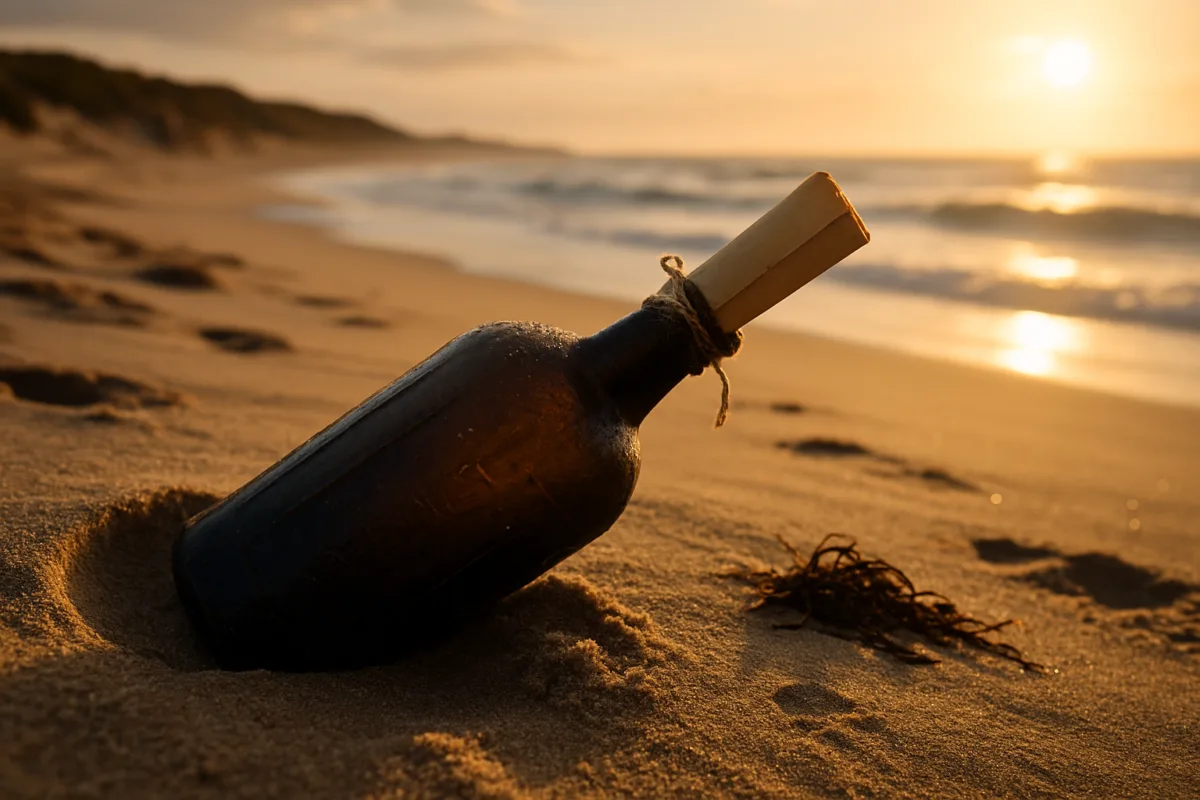
On a dune in Western Australia, a casual beachcomber found what would become the oldest message in a bottle ever recovered — a dark glass jar with a fragile rolled slip dated 12 June 1886. That single object, recovered by Tonya Illman in January 2018, is not merely a romantic curiosity; it forces a reassessment of how we value long-term scientific experiments, archival stewardship, and the role of everyday people in preserving scientific data.
The drift bottle: a forgotten tool of oceanography
Between 1864 and 1933, the German Naval Observatory in Hamburg, the Deutsche Seewarte, ran one of the most ambitious low-tech oceanographic experiments ever attempted. Captains tossed thousands of drift bottles overboard with printed slips asking finders to report location and date back to Hamburg or the nearest German consulate.
Proponents argued that these bottles—simple, inexpensive, and global—would map ocean currents and point to faster shipping routes. Skeptics dismissed them as noisy, low-return experiments. Yet when a slip washed ashore 131 years after being thrown from the barque Paula, the experiment’s patience was vindicated in the most literal sense.
Why the 1886 bottle matters more than its size suggests
It is tempting to treat this discovery as an anecdote: a quaint relic and a human-interest headline. However, the real significance is procedural and epistemic. The slip from Paula matched the ship’s meteorological journal entry and coordinates, and handwriting analysis linked the form to the captain’s hand. That level of verification turns a curious artifact into a legitimate data point.
Moreover, this find shows that data can outlast institutions and expectations. The Deutsche Seewarte’s program ended decades ago, yet one of its data points arrived late and intact. Consequently, we should stop thinking of data as meaningful only within the narrow timeframes of modern funding cycles or publication windows.
Archival rigor confirmed: matching bottle to logbook
The detective work that established the bottle’s provenance is instructive. Maritime archaeologists and archivists compared the bottle’s manufacturing traits, ink and paper composition, and printed slip format against 19th-century standards and finds. Crucially, they accessed Paula’s meteorological journal and confirmed an entry for 12 June 1886 recording a drift bottle thrown at the same coordinates.
This cross-validation from separate archives and physical material analysis is an argument for stronger investment in cataloguing and digitizing historical records. Without those archives, the bottle would have remained curiosity; with them, it became confirmed evidence.
Counterarguments: is one data point meaningful?
Critics will rightly note that one verified recovery does not remake oceanography. The drift bottle program returned fewer than one in ten throws, and currents are complex and stochastic. A single bottle cannot resolve seasonal variability, eddies, or fine-scale dynamics.
Yet this objection misses the larger point. The value here is methodological: the ability to trace a complete provenance chain for a data point separated from its origin by more than a century. That capacity to verify—even belatedly—strengthens the credibility of historical datasets and suggests that other old measurements might still be recoverable and useful.
What this teaches about long-term experiments
Long-term experiments are politically and financially fragile. Funding agencies prefer short-term deliverables, and institutional memory decays. Nevertheless, this bottle demonstrates that long-duration data can have outsized returns over time, sometimes in ways no planner could predict.
Therefore, policy should not judge the value of long-term projects solely on immediate outputs. Instead, we should design maintenance plans, open-access archives, and international networks that permit belated verification and reuse of old data.
Transitional point: connecting past methods to modern approaches
Moving from drift bottles to modern floats and satellite telemetry, there is an obvious technological leap. Still, both approaches share the same fundamental requirement: traceability. Whether an Argo float or a 19th-century bottle, knowing where and when a device was deployed—and preserving that metadata—is essential.
Accordingly, today’s oceanographers and funders should treat metadata preservation as infrastructure, not paperwork.
Citizen discovery: why Tonya Illman’s find matters for public science
Tonya Illman was not a scientist; she was a walker and a litter-picker who noticed a pretty bottle. Her role in recovering a verified piece of scientific data shows how much scientific enterprise benefits from an engaged public. Citizen observers extend the reach of formal research networks, sometimes in serendipitous ways.
However, this points to responsibilities on both sides. Scientists and institutions must provide clear pathways for the public to report finds. Meanwhile, the public needs basic guidance on handling fragile artifacts to avoid accidental damage.
Practical steps if you find a historic object
If you discover a fragile historical object on a beach, first document it: take photos, note GPS coordinates, and avoid excessive handling. Contact local museums, historical societies, or maritime archaeology departments, and follow their guidance. This preserves both the object and the contextual data that make it scientifically valuable.
By contrast, well-meaning but improper conservation—like hastily drying delicate paper in extreme heat—can destroy evidence. Therefore, bridging public enthusiasm with institutional expertise is a practical priority.
Broader implications for archival policy and international cooperation
The bottle’s story also underscores the transnational nature of scientific data. A German program launched the experiment, a British port figure appears in the Paula’s voyage, and an Australian beach produced the return. Multiple nations and institutions were necessary to verify the find.
Consequently, international collaboration in archiving, digitization, and legal frameworks for reporting finds is not optional. It is essential for unlocking the latent value in dispersed historical records.
How museums and agencies can make more discoveries possible
Museums should adopt proactive outreach programs that inform the public how to report finds and what evidence to preserve. Digitization initiatives should prioritize searchable metadata for logbooks, meteorological journals, and deployment records. Funders should create small rapid-response grants for cataloguing and verifying discoveries reported by citizens.
Such investments are modest relative to major scientific instruments, but they multiply the usefulness of existing historical collections and increase the odds that more long-lost data will be recovered and verified.
Further reflection: patience as a scientific virtue
Science prizes speed—fast publications, rapid innovation—but the bottle from 1886 is a reminder that patience can be a scientific virtue. Not every experiment yields timely results; some require decades, generations, or serendipitous weather to complete a loop.
Recognizing this, institutions should preserve not only artifacts but the knowledge and processes that allow belated completions of old experiments.
Ultimately, the 1886 drift bottle is more than maritime lore; it’s an argument. It argues for sustained archival care, for citizen partnerships that can surface hidden data, and for a scientific culture that values durability as well as immediacy. If we act on that argument—by funding digitization, by creating clear reporting pathways, and by treating metadata as infrastructure—we increase the odds that other time-lagged discoveries will complete their journeys and enrich our understanding of the world.
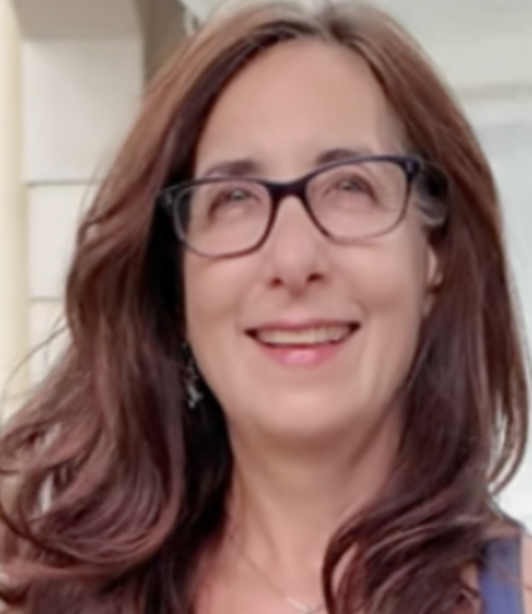
Dr. Morgan directed the Archives Program from 2014 to 2017, gaining extensive experience in research documentation, information management, and the preservation of scholarly resources. Throughout her career, she has worked closely with academic publications and research materials, developing expertise in evaluating scientific sources and communicating complex topics to broad audiences.
Her primary areas of specialization include scientific publishing, research communication, editorial review, and the translation of technical research into accessible educational content. She has contributed to projects involving space science, astronomy, environmental science, history, archaeology, and emerging scientific discoveries, always emphasizing accuracy, transparency, and the responsible presentation of evidence.
As Editorial Director of Muskurahat.us, Dr. Morgan leads the editorial review process for scientific articles, ensuring that content is based on reputable sources, peer-reviewed research whenever available, and publications from recognized universities, research institutions, and international scientific organizations.
She is committed to promoting scientific literacy through clear, engaging, and well-documented articles that help readers better understand scientific discoveries and their impact on society. Her editorial philosophy is founded on accuracy, intellectual integrity, independent journalism, and continuous learning as scientific knowledge evolves.
Through her work at Muskurahat.us, Dr. Morgan supports the publication of trustworthy scientific content that makes complex research accessible to readers around the world while maintaining rigorous editorial standards.