When astronomers line up planets by size across the known galaxy, a surprising pattern emerges: the most common planetary class is one our own solar system entirely skipped. Between Earth and Neptune there is a crowded middle—planets larger than Earth but smaller than Neptune, often called super-Earths, mini-Neptunes or sub-Neptunes. The discovery that these in-between worlds are ubiquitous has reshaped how scientists ask fundamental questions about planet formation, habitability and what a “typical” planetary system looks like.
The missing middle: a new normal in planetary populations
For centuries the solar system served as the only template for planetary architecture. Small, rocky worlds clustered close to the Sun, then a sudden jump to gas and ice giants farther out. That clean separation—Earth as the largest rocky planet and Neptune as the nearest larger step—left an apparent gap in radii between roughly 1.5 and 3.9 Earth radii. With the explosion of exoplanet discoveries, that gap has disappeared. Transit surveys and radial-velocity programs now reveal thousands of confirmed planets in that radius range, and catalog queries show the population growing rapidly.
The language used to describe these bodies reflects the uncertainty around them. “Super-Earth” signals simply that a planet is larger than Earth without claiming it shares geological or atmospheric traits with Earth. “Sub-Neptune” emphasizes the planet’s position below Neptune in size, without implying it is a miniature version of an ice giant. These labels are pragmatic placeholders while astronomers work to determine what the different sizes actually correspond to in composition and structure.
How we know they’re common
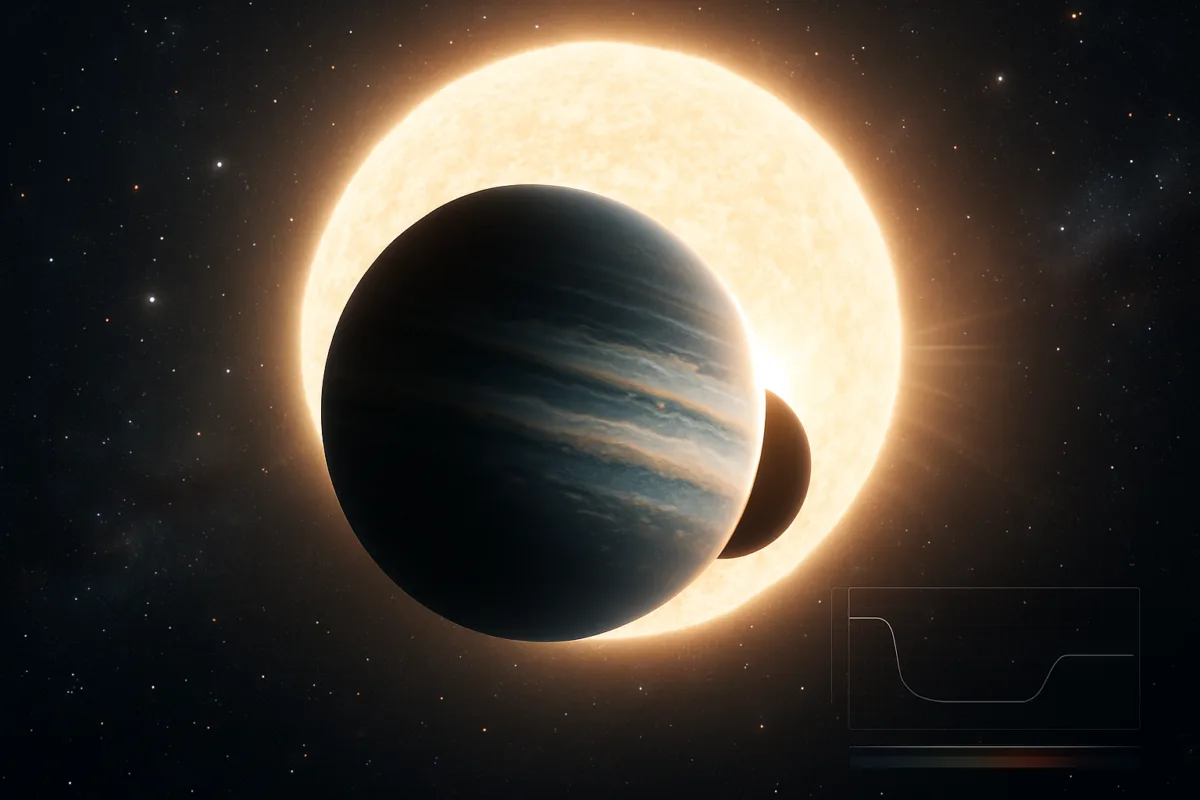
Modern exoplanet statistics come largely from transit missions—space telescopes that stare at thousands of stars waiting for tiny dips in brightness that occur when a planet crosses in front of its host star. The Kepler mission pioneered this approach and revealed many compact systems of small planets. Subsequent surveys, both space-based and ground-based, have expanded the census. NASA’s confirmed exoplanet archive now contains more than 6,000 entries in total, and a snapshot of the confirmed-planet table shows thousands occupying the Earth-to-Neptune radius range.
Transit detections are biased toward close-in planets, which partly explains why many sub-Neptunes are found in relatively tight orbits where they are warmer and easier to detect. Nevertheless, the sheer number of these detections—repeated across different stars and surveys—establishes sub-Neptunes as statistically common. The pattern is robust enough that astronomers now treat the solar system’s omission of such worlds as a scientific puzzle rather than a trivial curiosity.
What might these planets be like?
Possible internal structures and atmospheres
The same measured radius can correspond to many different interiors and envelopes. At one extreme, a 1.5–3 Earth-radius planet could be predominantly rocky, with a high-density iron-silicate core and a thin atmosphere. At the other extreme, it could be a water-rich world with deep global oceans under high pressure. Many sub-Neptunes appear to have substantial hydrogen/helium envelopes atop denser interiors—small gas envelopes that dramatically increase a planet’s radius without contributing much mass.
These differences matter because they affect surface conditions, potential habitability and the observational signals we can detect. A rocky planet with a thin atmosphere offers prospects of exposed land, weathering cycles and perhaps Earth-like climates. A dense, deep-envelope world with no exposed rock or a global high-pressure water layer would be a very different environment, with limited accessibility for surface-based biosignatures.
Atmospheric signatures: clouds, haze and hidden chemistry
Characterization of sub-Neptune atmospheres has proven difficult. Even when telescopes obtain repeated transits, many spectra are muted. Clouds and photochemical haze can obscure the spectral fingerprints of molecules such as water vapor, methane or hydrogen features. The James Webb Space Telescope (JWST) has improved sensitivity and opened new wavelength ranges, yet many sub-Neptunes still present flattened or ambiguous transmission spectra.
That observational opacity presents a double problem: it complicates efforts to determine composition and it leaves open multiple formation histories for otherwise similar planets. Are we seeing thick, high-altitude aerosols produced by energetic stellar radiation? Or are the atmospheres simply massive enough and compositionally complex enough that spectral features are hard to isolate? Resolving these questions requires a mix of better data, broader wavelength coverage and more sophisticated models for atmospheric chemistry and cloud microphysics.
Why our solar system has no sub-Neptunes
The absence of planets in the Earth-to-Neptune range in our own backyard is not merely an observational artifact; it reflects actual differences in how the solar system assembled. Several explanations have been proposed, and they are not mutually exclusive.
Giant-planet influence and disk dynamics
One idea centers on Jupiter’s early growth. As Jupiter accreted mass and migrated through the protoplanetary disk, it could have shepherded or scattered material that might otherwise have formed larger inner planets. In some models, Jupiter starved the inner solar system of the solids and gas necessary to grow mid-sized planets, effectively enforcing a dichotomy: small rocky planets inside, gas giants outside.
Collision and migration histories
Another possibility is that the solar system may have briefly hosted larger inner planets that were later destroyed or ejected through collisions and gravitational interactions. Planetary migration—both inward and outward—can rearrange architectures dramatically. Timing matters too: if gas dissipated from our disk before certain cores could acquire significant envelopes, then larger-radius outcomes might not have been possible.
Chance and initial conditions
Finally, the solar system might simply reflect a particular combination of disk mass, metallicity, turbulence and timing that is statistically rare. Planet formation is a stochastic process; slight differences in initial conditions can lead to very different end states. In that view, the solar system is one outcome among many, and the prevalence of sub-Neptunes elsewhere is a reminder that our system’s arrangement is not the default.
Implications for habitability and the search for Earth-like worlds
The discovery that many of the easiest-to-detect small exoplanets sit in the sub-Neptune regime complicates the quest to estimate how many truly Earth-like planets exist. If an apparently small planet turns out to have a thick envelope that drives extreme surface pressures and high temperatures, it could be inhospitable even if its radius seems modest. Conversely, a planet slightly larger than Earth might still be rocky and potentially habitable under the right circumstances.
Defining the boundary between rocky worlds and gas-enveloped mini-Neptunes is central to refining occurrence rates for Earth analogues. Mass measurements (which yield bulk density) and atmospheric characterization are both crucial. A measured radius alone cannot tell the whole story; scientists must combine multiple lines of evidence to classify a planet’s nature reliably.
Challenges and the path forward
Characterizing the sub-Neptune population poses observational and theoretical challenges. Degeneracies in mass-radius relationships mean different compositions can produce similar densities. Transmission spectroscopy can be hampered by clouds and haze. Even when atmospheric features are detected, interpreting them in terms of surface conditions or interior structure requires complex modeling.
New tools and techniques
Upcoming and existing facilities will help break these degeneracies. JWST continues to probe atmospheres at infrared wavelengths where certain molecules are more visible. Planned missions—such as ESA’s Ariel, designed specifically for atmospheric surveys—will survey exoplanet populations systematically. Ground-based extremely large telescopes (ELTs) will offer high-resolution spectroscopy and improved radial-velocity precision for mass measurements. Combined analyses across populations—comparing occurrence rates, stellar environments and planetary system architectures—will refine formation models.
Population studies and laboratory work
Beyond telescopes, laboratory experiments and theoretical models that study cloud formation, high-pressure ices and exotic chemistry will inform interpretations. Population-level statistics provide boundary conditions for models: any proposed formation pathway must reproduce the observed abundance of sub-Neptunes, their orbital distributions and their atmospheric properties.
That multi-pronged approach—more precise mass and radius measurements, broader spectral coverage, population studies and improved physical modeling—offers a realistic path toward understanding what most planets in the galaxy actually look like. Each new sub-Neptune added to catalogs is a test case that sharpens our picture of planetary diversity and challenges assumptions rooted in the solar system’s architecture.
Viewed from this perspective, the solar system’s lack of intermediate-sized worlds is not an absence so much as a clue. The crowded middle of the galaxy tells us that planet formation commonly produces a class of planets that our neighborhood bypassed. Untangling why will teach us not only about those strange, common worlds but also about the contingency of our own planetary history and the true range of environments where planets—and perhaps life—can arise.

Dr. Morgan directed the Archives Program from 2014 to 2017, gaining extensive experience in research documentation, information management, and the preservation of scholarly resources. Throughout her career, she has worked closely with academic publications and research materials, developing expertise in evaluating scientific sources and communicating complex topics to broad audiences.
Her primary areas of specialization include scientific publishing, research communication, editorial review, and the translation of technical research into accessible educational content. She has contributed to projects involving space science, astronomy, environmental science, history, archaeology, and emerging scientific discoveries, always emphasizing accuracy, transparency, and the responsible presentation of evidence.
As Editorial Director of Muskurahat.us, Dr. Morgan leads the editorial review process for scientific articles, ensuring that content is based on reputable sources, peer-reviewed research whenever available, and publications from recognized universities, research institutions, and international scientific organizations.
She is committed to promoting scientific literacy through clear, engaging, and well-documented articles that help readers better understand scientific discoveries and their impact on society. Her editorial philosophy is founded on accuracy, intellectual integrity, independent journalism, and continuous learning as scientific knowledge evolves.
Through her work at Muskurahat.us, Dr. Morgan supports the publication of trustworthy scientific content that makes complex research accessible to readers around the world while maintaining rigorous editorial standards.