
A recent investigation by cybersecurity specialists has revealed a Chinese-backed cyberespionage campaign aimed at US artificial intelligence policy experts. The attackers impersonated employees of Anthropic and former US officials to infiltrate communications at think tanks, universities, and law firms, attempting to steal data on American AI development. This incident highlights the cybersecurity challenges amid intensifying US-China competition in the AI sector and raises concerns about safeguarding sensitive research and policy information.
Chinese Hackers Use Deceptive Tactics to Target US AI Policy Experts
A detailed report from the Silicon Valley cybersecurity firm Proofpoint has uncovered an elaborate cyberespionage operation linked to a Chinese hacking group known as TA419. This group employed sophisticated impersonation strategies, posing as researchers from Anthropic—a prominent AI company—and former US government officials to deceive experts engaged in AI policy research.

The hackers initiated contact by sending carefully worded emails to professionals affiliated with US think tanks, academic institutions, and law firms. These messages invited recipients to participate in fabricated initiatives such as an “AI Policy Advisory Committee” or to contribute to a nonexistent Senate Committee on Foreign Relations report. After establishing initial communication, the attackers subsequently sent documents embedded with malware, aiming to infiltrate the recipients’ digital environments, particularly cloud storage accounts, to exfiltrate sensitive information.
Exploiting Trusted Identities of Former Officials and Industry Experts
The campaign notably involved the impersonation of high-profile individuals to build credibility and lower the target’s guard. Among those whose identities were mimicked was Lynne Edwards Parker, who formerly served as the Principal Deputy Director of the White House Office of Science and Technology Policy during the Biden administration. Parker expressed dismay at how professional relationships she cultivated over years were exploited by malicious actors seeking to deceive others.
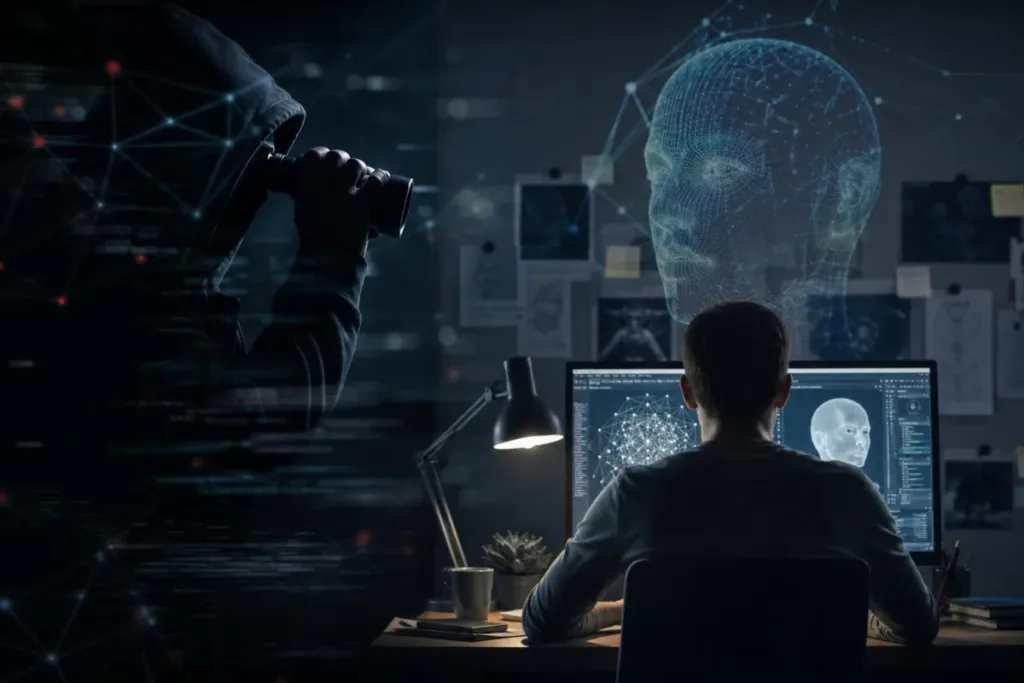
One illustrative example involved a phishing email purportedly from a senior Anthropic employee requesting feedback on the “Military Integration of Claude,” referencing Anthropic’s AI model. Using realistic subject lines and relevant topics helped the attackers convincingly simulate legitimate professional correspondence, increasing the likelihood that targets would open malware-laden attachments.
The Broader Context of the US-China AI Rivalry and Regulatory Challenges
This cyberespionage incident unfolds against the backdrop of intense competition between the United States and China over artificial intelligence leadership. Many American citizens and AI industry leaders, including Anthropic’s Dario Amodei, have voiced concerns about the risks posed by uncontrolled AI technologies and have advocated for clear government regulations to mitigate potential threats.
Conversely, the current US administration, alongside influential figures from major tech companies such as Meta’s Mark Zuckerberg and Nvidia’s Jensen Huang, has resisted comprehensive regulatory measures. Their argument centers on preserving America’s competitive edge in AI advancements. Former President Donald Trump epitomized this position by emphasizing the zero-sum nature of AI dominance with his statement, “Whoever wins AI, WINS!” This stance reflects the geopolitical stakes involved in the emerging technological race.
Implications for US National Security and AI Research Integrity
The ongoing efforts by TA419 to infiltrate AI policy circles represent a significant cybersecurity threat with potential national security implications. Access to confidential policy discussions and research data could provide strategic advantages to foreign adversaries, enabling them to undermine US interests in AI development and deployment.
The cybersecurity firm Proofpoint warns that such campaigns are expected to continue targeting think tanks and experts involved with sensitive technology sectors, especially those intersecting with Chinese governmental priorities. The hackers’ continued use of impersonation tactics underscores the importance of vigilance and robust security protocols among AI professionals and institutions handling critical information.
| Aspect | Details |
|---|---|
| Hacking Group | TA419 (Chinese government-aligned) |
| Primary Targets | US AI policy experts at think tanks, universities, law firms |
| Impersonated Identities | Anthropic researchers, former White House officials |
| Methodology | Emails inviting to fictitious committees, malware-laden documents |
| Notable Impersonated Individual | Lynne Edwards Parker, ex-White House OSTP deputy director |
| Goal | Access cloud accounts to steal AI development information |
| Expected Continuation | Ongoing targeting and impersonation tactics likely |
How AI Professionals and Organizations Can Respond to This Threat
Given the evolving threat landscape, it is vital that AI policy experts and associated organizations enhance their cybersecurity awareness and defenses. This includes rigorous verification of unsolicited communications, especially those requesting participation in unfamiliar committees or contributions to reports, and cautious handling of email attachments or links.
Organizations should implement multi-factor authentication for cloud services and regularly update their security infrastructure. Training programs to recognize phishing attempts and social engineering tactics can reduce vulnerability. Furthermore, sharing information about suspicious activities within the AI community can help build collective resilience against such cyber intrusions.
Frequently Asked Questions
Who is behind the cyberattack targeting US AI policy experts?
The cyberattack was conducted by TA419, a hacking group aligned with the Chinese government, using impersonation of AI professionals and former US officials.
How did the hackers manage to deceive their targets?
They sent emails inviting experts to participate in fabricated advisory committees or Senate reports, then followed up with malware-infected documents to access cloud accounts.
Why are US AI policy experts targeted by these hackers?
The hackers aim to obtain sensitive information about American AI technologies to support Chinese government interests and gain a strategic advantage.
Who was impersonated during this espionage campaign?
Among others, Lynne Edwards Parker, former Principal Deputy Director of the White House Office of Science and Technology Policy, was impersonated.
What are the consequences of this espionage campaign?
It threatens US national security, compromises the confidentiality of AI research, and highlights the need for stronger cybersecurity measures among AI policy professionals.
Sources
Futurism — article on Chinese hackers impersonating Anthropic employees to steal AI secrets
Proofpoint — cybersecurity report on TA419 hacking group targeting US AI policy experts

Dr. Morgan directed the Archives Program from 2014 to 2017, gaining extensive experience in research documentation, information management, and the preservation of scholarly resources. Throughout her career, she has worked closely with academic publications and research materials, developing expertise in evaluating scientific sources and communicating complex topics to broad audiences.
Her primary areas of specialization include scientific publishing, research communication, editorial review, and the translation of technical research into accessible educational content. She has contributed to projects involving space science, astronomy, environmental science, history, archaeology, and emerging scientific discoveries, always emphasizing accuracy, transparency, and the responsible presentation of evidence.
As Editorial Director of Muskurahat.us, Dr. Morgan leads the editorial review process for scientific articles, ensuring that content is based on reputable sources, peer-reviewed research whenever available, and publications from recognized universities, research institutions, and international scientific organizations.
She is committed to promoting scientific literacy through clear, engaging, and well-documented articles that help readers better understand scientific discoveries and their impact on society. Her editorial philosophy is founded on accuracy, intellectual integrity, independent journalism, and continuous learning as scientific knowledge evolves.
Through her work at Muskurahat.us, Dr. Morgan supports the publication of trustworthy scientific content that makes complex research accessible to readers around the world while maintaining rigorous editorial standards.